5th July, 2026
“Honestly, I barely drink anymore.”
“I really don’t drink that much, though.”
“Probably less than 2 drinks per week, most weeks?”
I hear this from women in clinic or via my coaching app nearly every day, usually from one who has just watched me raise an eyebrow at an alcohol entry on her food diary.
And despite what you may assume a health coach might think: I believe you.
You’re not drinking a bottle of Sauvignon Blanc solo on a Tuesday, or pounding glass after glass of champers without counting at a friend’s boozy birthday brunch like some of us (cough) may have done in our twenties.
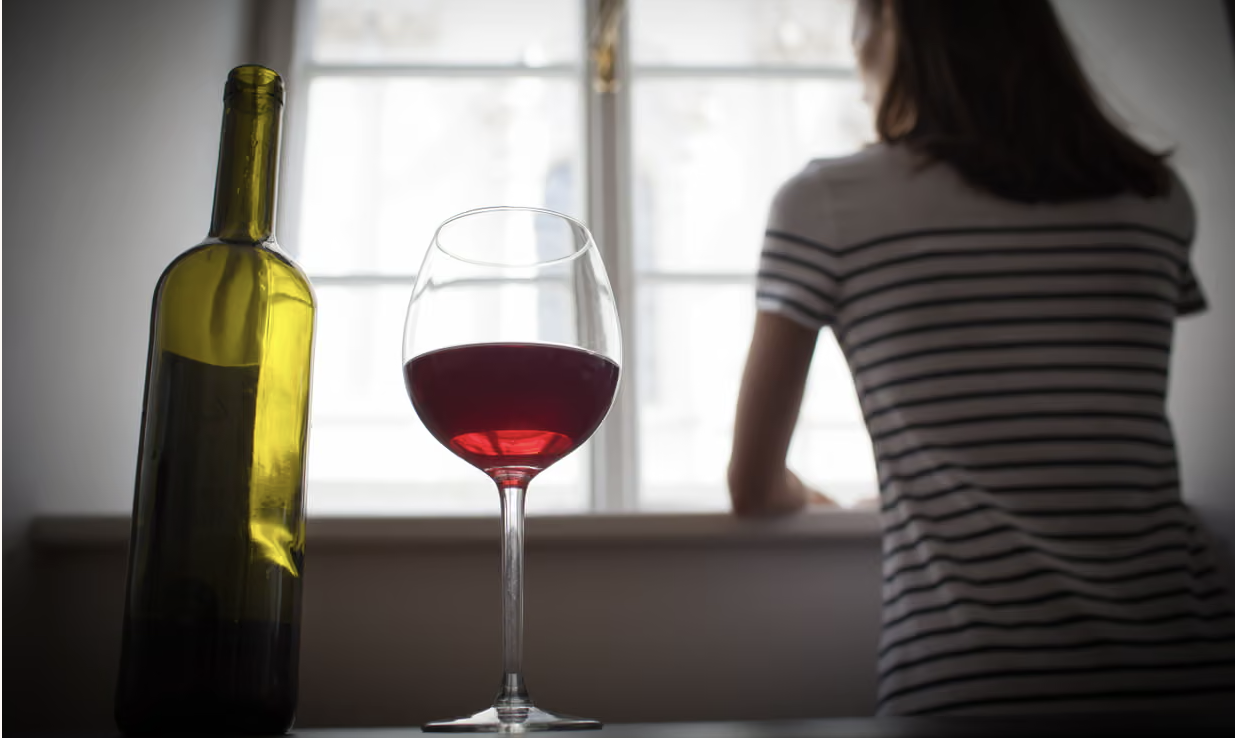
You’re realistically having a glass and a half of wine at book club, a G&T with your husband after work on a Friday, maybe a couple of PM proseccos at a baby shower. By any reasonable definition, it’s moderate alcohol consumption.
It’s also, in my clinical experience, one of the single biggest reasons perfectly sensible, perfectly compliant women plateau on weight loss.
Here’s the bit that tends to surprise people: the calories in your booze are the least of the metabolic problems with it.
One large glass of wine sits at around 175 calories, for example. Annoying, sure, but probably not the full reason your weight loss progress is slower than you’d hoped.
What’s actually going on is a metabolic and behavioural chain of events that starts the moment the alcohol hits your bloodstream and doesn’t fully resolve for the better part of two days (read that again: one drink; two days).
So if you’re only counting the calories in the glass, you are, quite literally, missing most of the story – and that’s the likely source of a lot of frustration.
It’s Not Exactly A Willpower Problem
Alcohol is a disinhibitor, and I don’t just mean in the “one tequila, two tequila, floor” sense.
It quite specifically lowers the activity in your prefrontal cortex, which is the part of your brain responsible for impulse control, future planning, and generally being the sensible adult in the room.
It’s the part of you that, stone cold sober, looks at the bread and butter and thinks “probably don’t need it tonight.” After two glasses of wine, that same voice shuts up, and the part of your brain screaming for salt, fat and carbohydrate takes over a bit more.
This is why nobody in the history of humankind has ever lined up for a side salad at 11pm after a few drinks while the kebab shop has a line down the block.
You don’t crave kale when you’re drinking; you want chips, cheese, and whatever white carb is most within reach. It isn’t a willpower failure. It’s neurochemistry doing exactly what it’s designed to do.
Which is precisely why “I’ll just have the wine and skip dessert” is a plan that sounds excellent at 6pm (when you do, virtuously, refuse the dessert menu) and falls apart entirely by 9pm (when somebody orders a plate of fries “for everyone” and you can’t help but grab a handful).
The Next-Day Tax
Then there’s the bit almost nobody accounts for: the day after.
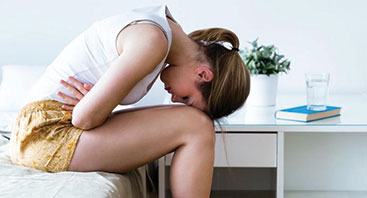
Hangxiety is real, clinically documented, and thoroughly unpleasant. As blood alcohol drops, cortisol and adrenaline rise, and you’re left with a jittery, low-grade dread that makes everything feel awful.
Your usual gym session you’d normally show up for without thinking twice suddenly feels like a genuinely bad idea. So does the meal prep, the food log, the walk, the whole carefully built scaffolding of habits that were actually working – it all feels like “too much” on a day where you feel like a lump of crap.
One night out doesn’t just cost you the calories consumed during it. It tends to cost you the next day’s worth of behaviours that were meant to be moving you forward. Multiply that by a “moderate” few nights a week and you’ve lost the better part of a month to recovery mode rather than actual progress mode.
It Is Actively Dismantling Your Sleep
I could write an entire post on this alone (perhaps I will) or even just the way it disrupts peri/menopausal sleep (another tome), but the short version is this:
Alcohol never ever helps you sleep, no matter how convincingly it knocks you out.
What it does is suppress REM sleep and fragment your sleep architecture in the second half of the night, which is exactly the window in which growth hormone release, muscle repair, and the hormonal regulation of hunger and satiety are meant to be happening.
Wake up after a couple of glasses and, chemically speaking, you are dealing with elevated cortisol, suppressed leptin, elevated ghrelin, and a body that is now actively working against the very fat loss you’re trying to achieve before you’ve even woken up for breakfast.
Poor sleep is one of the most robust predictors of overeating, insulin resistance, and inflammation we have in the literature, and alcohol is one of the most reliable ways to guarantee yours gets worse.
The Metabolic Bit: Where It Gets Really Unfair
Here’s the part I find most people have genuinely never been told, and it’s the part I find most fascinating clinically.
Alcohol is metabolised via a completely separate pathway to protein, fat, and carbohydrate, and your liver treats it as a priority toxin to clear rather than a fuel to use. While it’s busy doing that, fat oxidation essentially grinds to a halt – as in, all that exercise you did in the service of fat burn didn’t get the chance to do its hard-earned job.
To be clear: alcohol cannot be processed as “fuel” to your body; only as a poison, and once introduced in any amount, your metabolism basically shuts down all its other (helpful-to-health) processes until the booze is disposed with.
A landmark study published in the New England Journal of Medicine found that adding alcohol to the diet suppressed fat oxidation by roughly a third, and the effect lasted for as long as the alcohol was actively being metabolised.
That means every gram of fat you ate with your wine (hello, cheeseboard) is far more likely to be stored than burned, purely because your body has, quite sensibly from an evolutionary standpoint, decided that clearing the toxin comes first.
And then there’s muscle.
Research out of Australia looking at resistance training and recovery found that alcohol consumed after a workout significantly blunted the rise in muscle protein synthesis you’d normally get from training and protein intake — the exact process by which your body builds and maintains the lean mass that is, frankly, the entire point of all that lifting we’ve finally convinced women to do (sigh).
It’s worth being honest that the doses used in that particular study were high, closer to a binge-drinking night than a glass with dinner. But the direction of the effect holds even at more moderate intakes, and if you’re one of my clients doing strength sessions specifically to protect and build lean tissue as you age, pouring alcohol on top of your potential recovery window is, quite literally, working against the purpose of your own training.
And If You’re on a GLP-1: This Is Where It Stops Making Any Sense at All
If you’re on semaglutide, tirzepatide, or any other GLP-1 receptor agonist, alcohol deserves a particularly hard look, because the two genuinely do not sit well together, on almost every level.
GLP-1 RA drugs already slow gastric emptying, which is part of how they work. Add in alcohol, which sits in that slowed-down stomach for longer, and you get amplified nausea, amplified reflux, and in some cases, considerably more intense intoxication from the same amount you’d normally drink without issue.
Both alcohol and GLP-1s can independently lower blood sugar, and the overlap in symptoms between hypoglycaemia and simply being tipsy — dizziness, confusion, slurred speech — means it becomes genuinely difficult to tell whether you’re drunk or having a medical event, which is not the type of distinction you want to be worrying about at a dinner party.
And because these medications work in large part by quieting the very hunger and reward signals that alcohol then goes on to disinhibit, you end up fighting your own medication with a substance that undoes exactly the mechanism you’re paying for (another one step forward, two steps back level of frustration, and one that carries a fairly steep price tag).
Put simply: if you are on a drug specifically designed to lower your appetite and improve your relationship with food, drinking something that is specifically designed to disable the part of your brain governing appetite control is not balance. It’s paying for two things that cancel each other out.
What “Balance” Actually Means
I want to be careful here, because I am not the morality police, and I don’t think anyone becomes “healthier” by being made to feel ashamed of a glass of wine at a friend’s birthday.
I myself, in fact, choose to indulge in an ice cold craft beer every now and then (shocking, I know).
But I do think we all need to be honest about what we’re actually trading for our drinks, because claiming “I need alcohol in my life to feel balanced” is a narrative worth interrogating rather than accepting at face value.
Real balance is a life with enough strength, sleep, good food, and meaningful connections running through it that the absence of alcohol doesn’t automatically make that life feel unbalanced, un-fun, or disconnected.
Real balance is not a weekend binge dressed up as self-care because the alternative — sitting with your nervous system and the weight of your own commitments, relationships, and responsibilities without a chemical buffer — feels too uncomfortable.
You don’t have to quit.
But I would ask you to stop pricing alcohol by the calorie and start pricing it by everything else I wrote about here: the food it drags in behind it, the workout it costs you tomorrow, the sleep it fragments tonight, the fat-burning and muscle-building it pauses while your liver deals with the actual toxin, and, if you’re on a GLP-1, the medication it’s directly working against.
Once you see the whole bill, “I don’t drink that much” starts to feel a lot less like an in-court defense and a lot more like the beginning of an honest conversation with yourself.