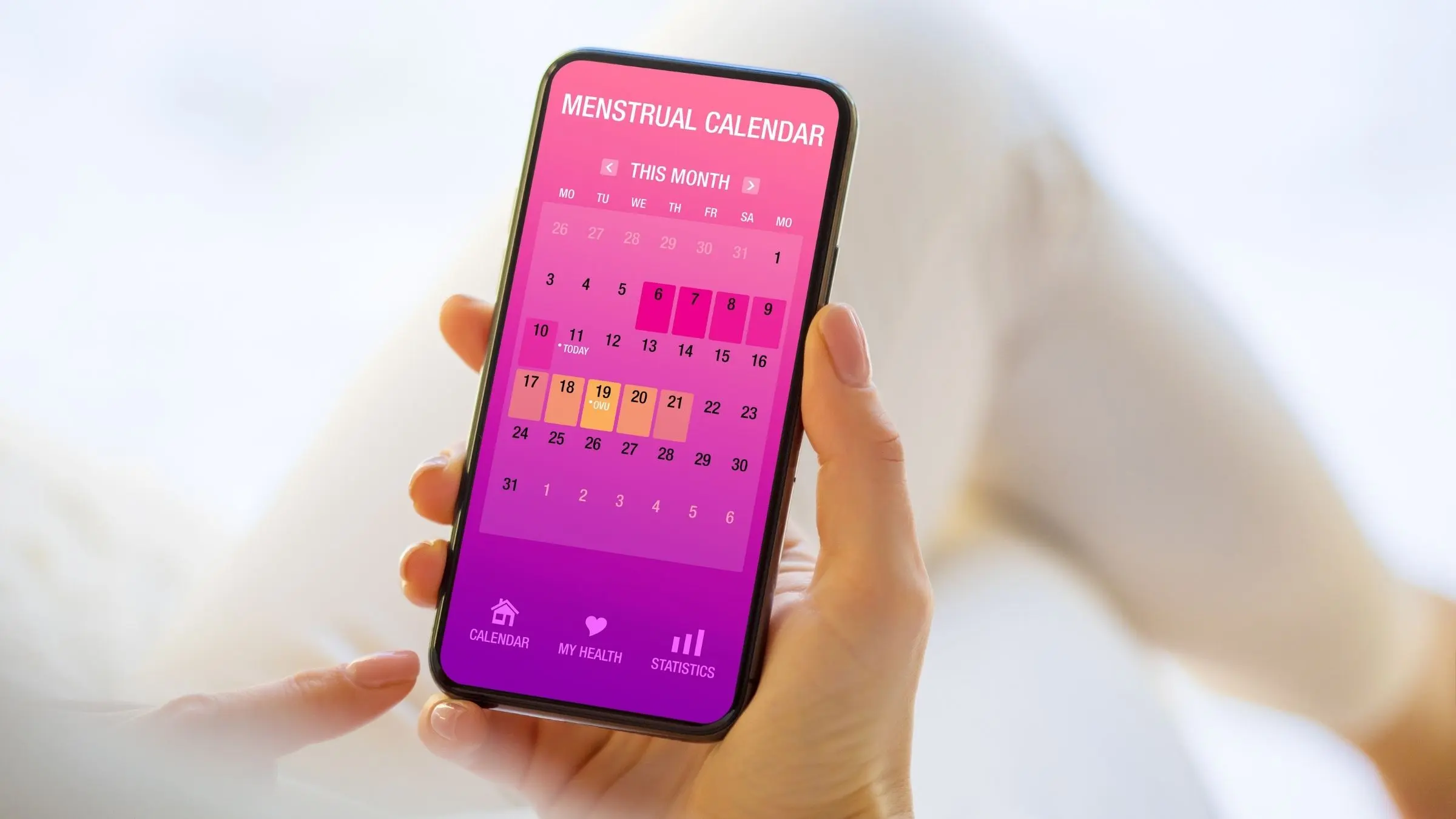
It’s crazy that about half the women walking into LIFT Clinic do not have a clue when their last period was.
And it’s not because they don’t care about their health.
A woman coming to a private metabolic health clinic is there precisely because she cares – but somewhere along the way, she was taught that a period is something to manage discreetly and then forget about until it reappears, slightly inconveniently, during a work trip or a beach holiday.
We happily track our steps, our sleep, our protein, our HRV. Yet the one signal that is (arguably) more informative than all of them combined gets a tampon and a shrug.
Your cycle is not incidental to your health.
The American College of Obstetricians and Gynaecologists has gone as far as calling menstrual regularity a vital sign, in the same category as blood pressure or resting heart rate. A vital sign is something you’d definitely notice going wrong. Nobody ignores a blood pressure over 150. And yet a cycle that’s subtly drifted from 28 days to 24, or from a manageable few days of bleeding to something heavier and harder, gets filed under “getting older” rather than “worth investigating.”
So let’s do some investigating of our own, shall we?
From Adolescence Onward, It’s Been Telling You Something
If you have a daughter, or you remember your own adolescence with any clarity (tough, I know), you’ll know that the first few years of a menstrual cycle are often irregular, and that’s genuinely normal while the hypothalamic-pituitary-ovarian axis is still finding its rhythm.
But irregularity that persists, or is accompanied by extreme pain, heavy bleeding, or absent periods altogether, is not a rite of passage to be endured quietly until it sorts itself out. It can be the first visible sign of PMOS, thyroid dysfunction, an eating disorder, or overtraining relative to fuel intake (called RED-S, and happening particularly among young athletes).
A teenager who has been taught to track her cycle from the start, even just noting rough dates, has an important baseline. Without one, by the time something changes, nobody, including her doctor, has anything to compare it to.
The Fertility Years: Yes, Obviously
I’ll deal with the obvious use case briefly because it is obvious and usually well understood.
If you are trying to conceive, or (ahem) trying quite hard not to, tracking your cycle (and if you want to get technical, tracking your ovulation) tells you your fertile window with far more precision than counting vaguely on your fingers from day one.
Fine. Understood.
But I want to push past this, because I think the fixation on fertility as the only reason to track is exactly why so many women stop paying attention to their cycles the moment they’ve had their children, or decided not to.
Your cycle keeps talking long after it’s stopped being about whether you can get pregnant. The mistake is assuming it only had one thing to say.
Perimenopause Is Where This Actually Gets Urgent
Here is the part I most want you to sit with, particularly if you’re in midlife.
Perimenopause does not arrive as a tidy, linear decline in oestrogen (sigh, if only). It arrives like a lion: oestrogen and progesterone swinging unpredictably from month to month, sometimes day to day, which is precisely why blood tests are so often useless for diagnosing it, and tracking symptoms and menstrual history remains the better tool.
Cycles might shorten to twenty-one days, then stretch to forty, then vanish for two months and reappear with a vengeance. And crucially, this is the exact window in which other symptoms tend to worsen and multiply. Hot flushes, yes, but also the far more commonly reported and far less discussed symptoms: the brain fog, the rage that arrives from nowhere, the sleep that shatters at 3am, the joint pain that makes you feel decades older than you are.
One large cohort study found the five most prevalent perimenopausal symptoms were fatigue, memory problems, difficulty concentrating, irritability, and a persistent sense of being tense or nervous, with hot flushes barely cracking the top fifteen. Most women have been sold hot flushes as the headline act when the real disruption is happening somewhere else entirely.
This is precisely where cycle tracking stops being a nice-to-have and becomes clinical gold.
If you walk into a conventional doctor’s office at age 47 saying “I feel off,” that’s a conversation that goes nowhere fast. If you walk in with three months of dates, symptoms, and bleeding patterns, that’s a conversation that goes somewhere immediately, because a genuinely erratic cycle alongside worsening mood, sleep, and cognitive symptoms is one of the clearest clinical pictures of perimenopause we have.
And it matters, because hormone replacement therapy works, often dramatically, for exactly the symptoms women are least likely to connect back to their hormones. Mood-related symptoms in particular have shown remarkable improvement with HRT in ways antidepressants alone often can’t match, because you cannot medicate your way out of an oestrogen problem with a serotonin solution (read this as: don’t let a doc convince you an SSRI is “all you need” if your symptoms suggest otherwise).
The data you collect isn’t for your own curiosity. It’s the evidence base for a conversation about treatment that women are still, decades after the WHI scare distorted the picture for an entire generation of doctors and patients alike, having to fight to be taken seriously in.
The Thing I Actually Care Most About As A Clinical Coach
Here’s my slightly more radical closing thought, because I think it matters more than talking about which period-tracking app to use or which herbal supplement to take:
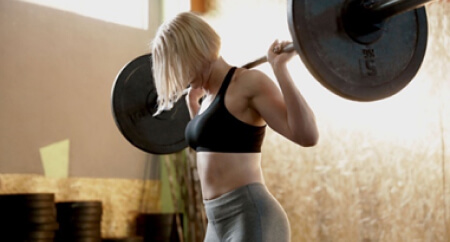
There’s a (dangerous) wellness trend at the moment telling women to sync their workouts entirely to their cycle: lift heavy and run fast in the follicular phase, go gentle and do yoga in the luteal phase, treat your hormones as a fixed script your training must obey.
I understand the appeal. I also think it’s mostly nonsense, and worse, it can become its own form of self-punishment.
The actual research on menstrual cycle phase and strength performance is far messier and far less conclusive than the content telling you otherwise would suggest, with reviews describing the evidence as highly variable and, at present, insufficient to build reliable training guidelines from.
Many women do feel a real, reproducible dip before their period. Many don’t. The population-level patterns that influencers are always shouting about barely whispers in the actual literature.
Which is exactly why tracking matters, and why blind rule-following doesn’t. The point was never to hand yourself a universal script that says you’re doomed to a bad squat day three days before your period, because for a great many women, that simply isn’t true, and treating it as gospel is just a more sophisticated way of finding a reason to be disappointed in your own body on a schedule.
The point is to build your own dataset, about your own body, so that when your lift genuinely does feel harder that week, you have the actual context to know whether that’s your cycle, your sleep, your stress, or simply an off day that has nothing to do with your hormones at all. Self-knowledge feels so much better than self-blame, promise.
And that’s the entire point of collecting any health data in the first place: the critical difference between a woman who understands her own patterns and a woman who’s outsourced her self-worth to some period app’s generic phase chart (or worse, some ditzy influencer trying to sell you a course about it).
You don’t need to be perfect about this. You need a rough record, kept consistently, of cycle dates and how you actually felt.
That’s it. That’s the whole intervention, and it might be the single most useful five minutes a month you spend on your own health.